
The Legend of Chanderi: A Journey from Vedic Myths to Royal Courts
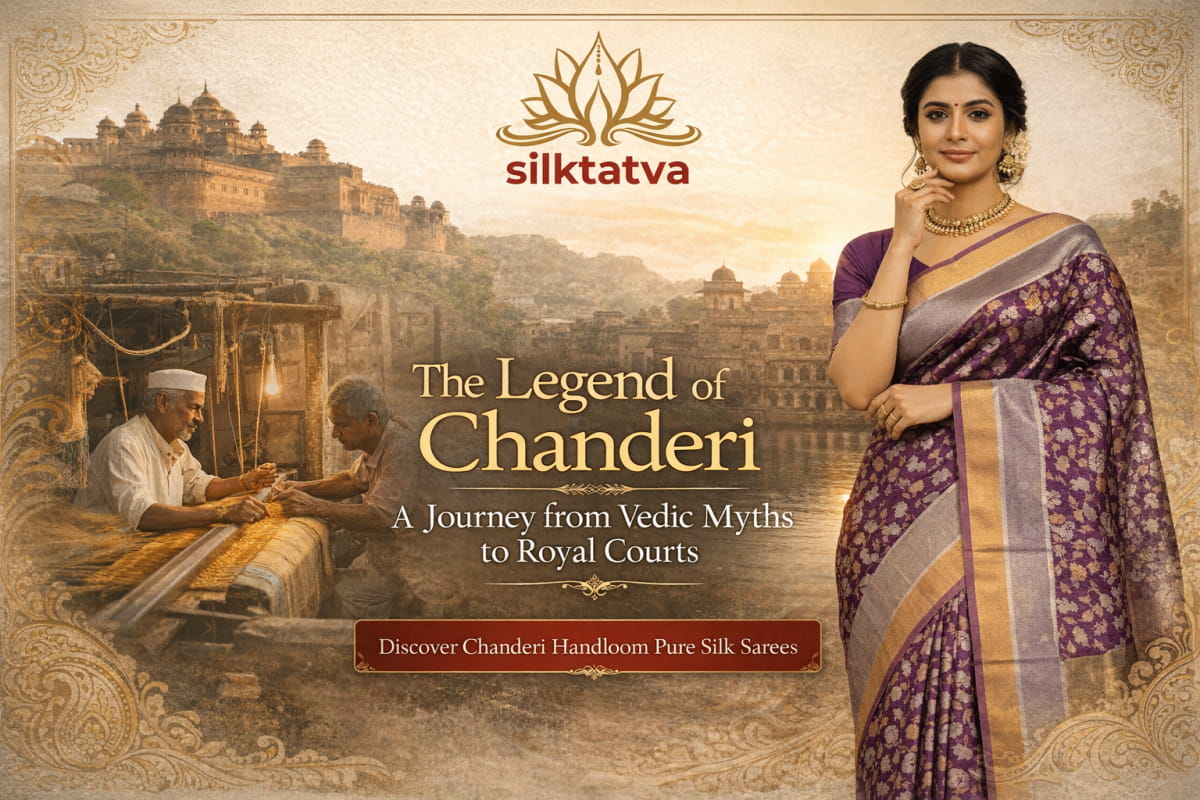
When you drape a Chanderi Handloom Pure Silk Saree, you aren’t just wearing six yards of fabric; you are wearing a legacy that has survived three millennia. Known as "Woven Air" for its ethereal transparency and feather-light feel, Chanderi is one of India’s most storied textiles.
At Silk Tatva, we believe that understanding the soul of a weave makes it even more beautiful. Let’s journey back in time to explore how this "gossamer" fabric became the pride of Indian royalty.
1. The Divine Connection: Vedic Origins
The history of Chanderi is inseparable from Indian mythology. Local legends trace the origin of the fabric back to the Vedic period. It is believed that Shishupal, the King of Chedi and cousin of Lord Krishna, founded the town of Chanderi and introduced this delicate weaving style. While historical records are harder to find from that era, the association with Shishupal highlights just how deeply rooted this craft is in the Indian subconscious.
2. The Golden Age: Mughal Splendor
Chanderi’s true "Royal Era" flourished during the medieval period. In the 13th and 14th centuries, the town became a strategic trade hub between Malwa and Bundelkhand.
By the time of the Mughal Empire, Chanderi had become the fabric of choice for emperors and queens. Historical texts like the Maasir-i-Alamgiri mention that Emperor Aurangzeb ordered a special, transparent cloth embroidered with gold and silver for his ceremonial robes. The weavers of Chanderi were masters at creating Katan Silk and fine muslins that were so delicate they were often compared to the famous Jamdani of Dhaka.
3. The Scindia Revival: 1910 and Beyond
Like many handlooms, Chanderi faced a decline during the British Industrial Revolution. However, the craft saw a majestic revival in 1910, thanks to the Scindia Royal Family of Gwalior.
Under their patronage:
- Gold Zari borders were introduced to the main body of the saree.
- The fabric transitioned from pure cotton to a luxurious blend of silk and cotton, and eventually to the Pure Silk Chanderi we adore today.
- The royal women of the Scindia and Holkar dynasties became global ambassadors for the weave, often appearing in portraits wearing translucent Chanderis adorned with Ashrafi (coin) motifs.
4. What Makes It "Heritage"?
What sets a Chanderi apart is the Technical Artistry. Every authentic Chanderi saree is characterized by:
The "Woven Air" Texture: Created by using non-degummed silk, which gives the fabric its signature transparency and a soft, natural sheen.
Extra Weft Motifs: Traditional Buttis (motifs) like the Peacock, Lotus, and Asharfi are hand-woven into the fabric using separate needles, making them appear as if they are floating on the surface.
The GI Tag: In 2005, Chanderi was granted the Geographical Indication (GI) tag, legally protecting the craft and ensuring that only sarees woven in the town of Chanderi can carry this prestigious name.
A Note from Silktatva: "Every time you choose a handloom Chanderi, you support a weaver family in Madhya Pradesh that has kept this 11th-century art alive through sheer grit and skill."
Experience the Legacy
The Chanderi saree is a bridge between our glorious past and a sustainable future. Whether it’s the soft hum of the pit loom or the glimmer of the gold zari, there is a piece of history in every thread.
Explore our curated collection of Authentic Chanderi Handloom Pure Silk Sarees here
Related Posts
.jpeg)
.jpg)

.jpg)
.jpg)